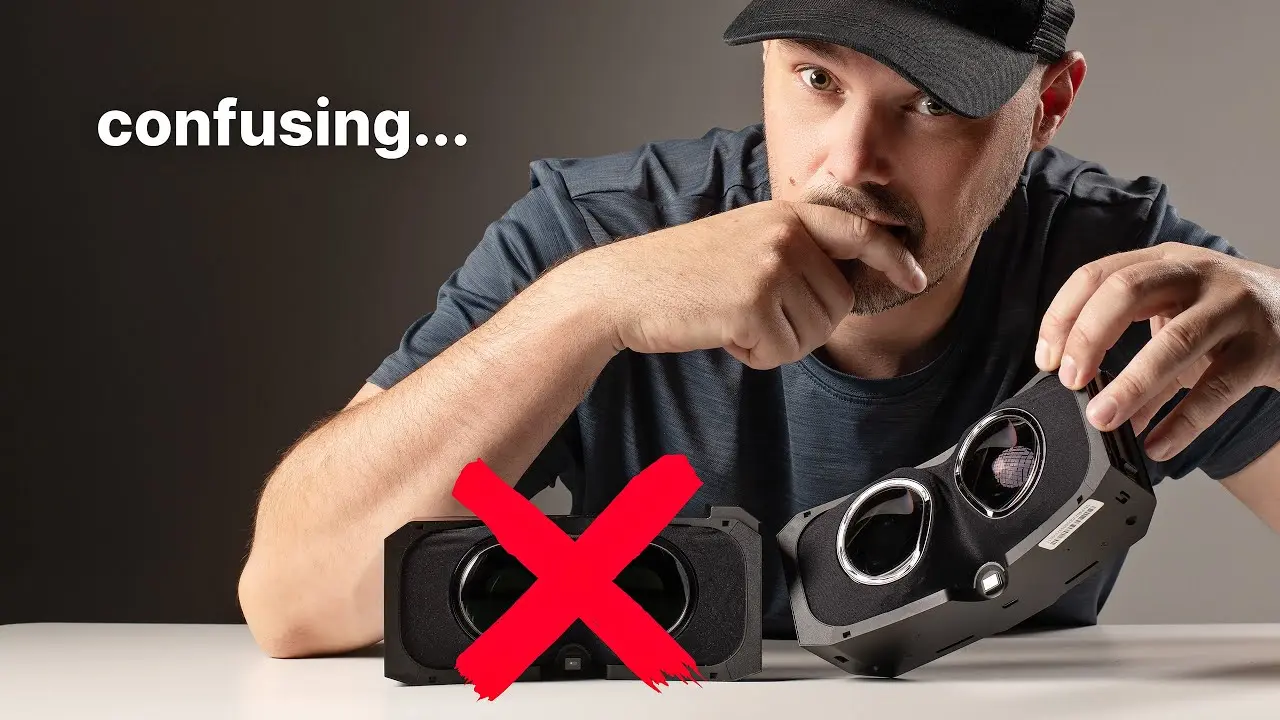
Pimax Crystal Super Ultra Wide vs Standard

Steve | G-LOC MEDIA
Flight simulation enthusiast and YouTuber
In the Pimax Crystal Super Ultra Wide vs Standard comparison, the ultra wide wins on every meaningful metric - around 10 degrees more horizontal FOV, near-identical sharpness, and a noticeably more immersive cockpit experience across flight sims. The binocular overlap drops from 72% to 62% which is worth knowing about if you're sensitive to eye strain, but for most people it simply isn't a problem. If you're buying a Crystal Super for the first time the answer is ultra wide every time - and if Pimax had any sense they'd just retire the standard 50 PPD module entirely.
Pros
- Around 10 degrees more horizontal FOV than the standard module - 132 vs 121 degrees
- Near-identical sharpness - virtually impossible to tell the difference in real use
- More immersive cockpit feeling - less claustrophobic, better peripheral awareness
- Same weight and balance as the standard module - no comfort trade-off
- Swaps modules in under 30 seconds with no tools
- Compatible with HonsVR prescription lens inserts without any changes
- or new buyers it's just the better choice - no reason to pick the standard
Cons
- Binocular overlap drops from 72% to 62% - noticeable over longer sessions and can contribute to eye strain
- Not a worthwhile upgrade if you already own the standard module - difference doesn't justify the cost
- Vertical FOV is actually marginally less - 96 vs 98 degrees (negligible but worth noting)
- Pimax having both modules in the lineup at the same time is confusing for new buyers
- Still requires a powerful PC to drive properly - that hasn't changed
Pimax Crystal Super Ultra Wide vs Standard — Honest Verdict After Testing Both
I'm going to say something a little controversial. Pimax should probably stop selling the standard 50 PPD Crystal Super module. Because now that I've spent proper time with the ultra wide version across multiple flight sims, I honestly can't think of a good reason why anyone would choose the standard one anymore.That's not a clickbait opener. By the end of this I'll explain exactly why I think that — and also tell you when the upgrade isn't worth it.
What Is the Pimax Crystal Super Modular System?
Quick bit of context if you're new to the Crystal Super lineup. The Pimax Crystal Super is a modular headset, which means you can swap the optical modules in and out to change how the headset performs. The core hardware stays the same — same panels, same resolution, same refresh rate. What changes is the field of view and the pixel density characteristics depending on which optic you choose.There are a few modules in the lineup — the standard 50 PPD, the ultra wide, the 57 PPD, and OLED versions. This review is purely about the Pimax Crystal Super Ultra Wide vs Standard 50 PPD comparison. Pimax did send both units as loaners for testing, but as always this is completely my own opinion.
Installation - Easier Than You'd Think
Swapping the modules takes less than 30 seconds. Pull off the fascia plate, release the two tabs, drop the old module out and snap the new one in. No tools, no fuss, and the fit is genuinely solid. Weight feels identical between the two and the balance on your face doesn't change at all. If you were worried about that, don't be.One thing worth flagging — if you use prescription lens inserts like the HonsVR ones, they work perfectly fine with the ultra wide module using the same mounting system as the original.
First Impressions: More FOV, But Not Dramatically More
The extra width is immediately noticeable but it's not a dramatic jump. My first impression was somewhere around seven or eight percent wider, maybe a touch more. The height feels about the same. The resolution feels identical — I genuinely couldn't pick it between the two in those first few minutes.What I did notice straight away was an increased sense of being inside the aircraft. That feeling you get in VR of actually being in the cockpit space — the ultra wide just turns that up a notch. It's hard to quantify but it's definitely there.
The Numbers: Pimax Crystal Super Ultra Wide vs Standard FOV
I used an FOV measurement tool to get some actual data rather than just going off feel. Worth noting that your results will vary depending on your face shape, foam thickness, prescription lenses, and how tightly the headset sits — but here's what I measured using the comfort face padding and HonsVR prescription lenses:Horizontal FOV:
Ultra Wide: ~132 degrees
Standard 50 PPD: ~121 degrees
Difference: roughly 10 degrees wider, about 9%
Vertical FOV:
Ultra Wide: ~96 degrees
Standard 50 PPD: ~98 degrees
Difference: basically the same — only about 2%
Binocular Overlap:
Ultra Wide: ~62%
Standard 50 PPD: ~72%
So yes - more horizontal FOV, same vertical, and less binocular overlap. That's the trade-off.
Binocular Overlap - Is It Actually a Problem?
For anyone not familiar, binocular overlap is the area where both eyes see the same image. When headsets push for a wider FOV they usually sacrifice some of that overlap by angling the lenses further outward. Less overlap means wider view, but it can cause eye strain for some people.I consider myself quite sensitive to binocular overlap issues. With the ultra wide I can tell there's less overlap - it's not terrible, it's not like some headsets that just feel immediately off, but it is noticeable over longer sessions and I do think it contributes to eye strain. Is it a deal breaker? For me, absolutely not. But if you're extremely sensitive to this it's worth knowing about before you buy.
How Does It Perform in Flight Sims?
The extra FOV makes a genuine difference in the cockpit. The best way I can describe it is that things feel less claustrophobic. When you glance to the side to check your wing you're seeing just a bit more. In DCS it gives you slightly more peripheral vision and that sense of actually being inside the aircraft goes up another level.Is it game-changing? No. But it is better. And when it comes to sharpness — which was the thing I was most curious about — I can barely tell the difference. There might be the tiniest bit of softness compared to the standard module but it's genuinely minimal. For all practical purposes you're getting more FOV without giving up any meaningful clarity. That's a big deal.
So Should Pimax Stop Selling the Standard 50 PPD Module?
Here's my actual take. The Pimax Crystal Super Ultra Wide vs Standard comparison really comes down to this - the ultra wide is just better. It's wider, it doesn't sacrifice meaningful clarity, and the binocular overlap reduction isn't going to be a problem for the vast majority of people.So now you've got a situation where Pimax is selling two versions of basically the same thing, except one is objectively better. That's confusing for customers. My recommendation would be to ditch the standard 50 PPD, keep the ultra wide as the default wide FOV option, keep the OLED for people who want OLED panels, and keep the 57 PPD for anyone who wants maximum clarity over FOV. Three clear options instead of four.
Who Should Buy the Pimax Crystal Super Ultra Wide?
Buy the ultra wide if:
You're buying a Crystal Super for the first time — just get this one, don't overthink it
You want the most immersive wide FOV experience available in the lineup
You're not extremely sensitive to binocular overlap issues
Stick with the standard or consider the 57 PPD if:
You're very sensitive to eye strain or binocular overlap — the 57 PPD gives you more overlap and more clarity
You already own the standard module — the difference is not big enough to justify the cost of upgrading
Should existing standard module owners upgrade?
No. The difference is noticeable but it's not big enough to justify spending money on another module. You've already got a great experience with the standard — save your money. The only exception is if you're someone who really values every bit of FOV you can get and genuinely have money to burn.Final Verdict
The Pimax Crystal Super Ultra Wide is wider, more immersive, and now my go-to recommendation for anyone buying into the Crystal Super ecosystem for the first time. If you're choosing between the standard 50 PPD and the ultra wide, the answer is just ultra wide every single time. The fact that the standard is still in the lineup honestly just makes things more confusing than they need to be.Affiliate Disclosure: Some links on this page are affiliate links. If you click and make a purchase, I may earn a small commission at no extra cost to you. I only recommend products I personally believe in.