Moza AB6 Force Feedback Joystick Review

Steve | G-LOC MEDIA
Flight simulation enthusiast and YouTuber
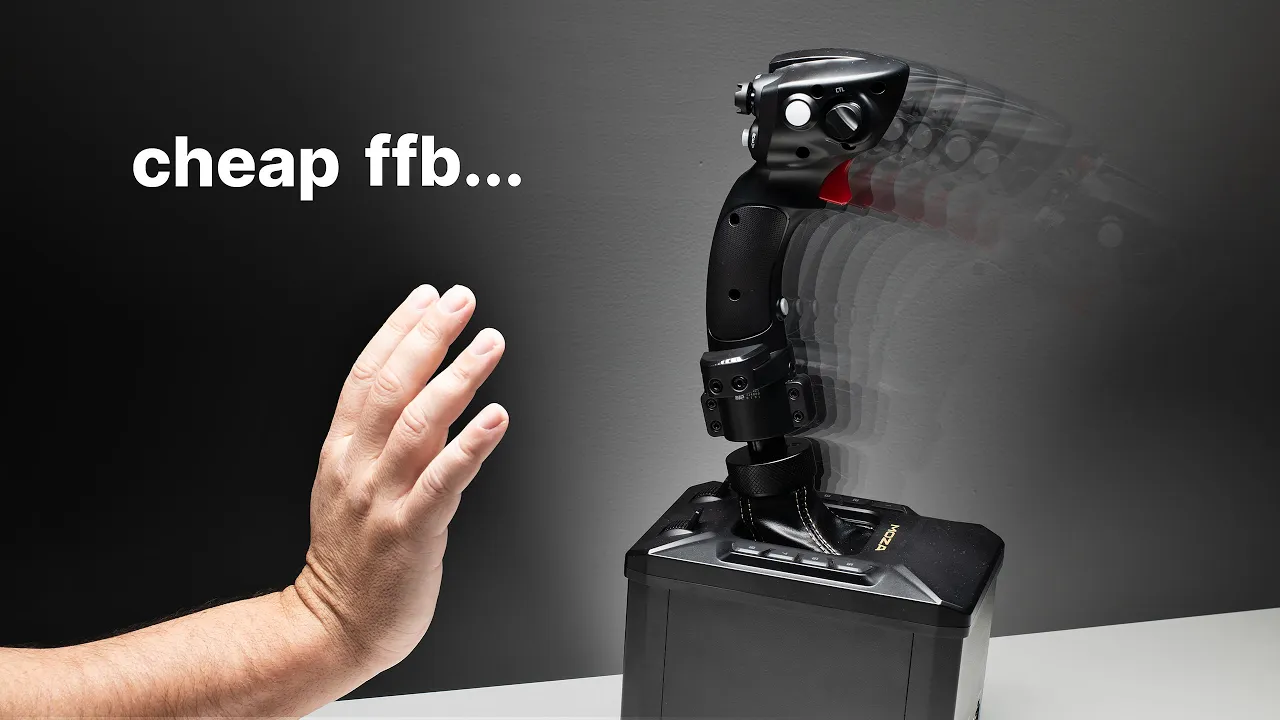
The Moza AB6 is the cheapest force feedback joystick on the market at $400 complete, and it genuinely delivers a fun, immersive experience that no traditional stick at this price can match. The gear-driven mechanism means it's not as smooth as the AB9 and the power output is noticeably lower, but for most aircraft types and especially newcomers to force feedback, it has more than enough to put a big smile on your face. If you've got a solid desk or cockpit setup and you're willing to put in a couple of hours learning the software, this is an easy recommendation.
Pros
- A keen price
- Reasonable force feedback
- Software is now good
- Compact in size
Cons
- It's a little coggy
- Not great for simmers that want ultra fine input
Price and Market Position
The flight sim community has been asking for an affordable force feedback joystick for years, and Moza has finally delivered with the AB6. Priced at $400 USD, it’s the cheapest force feedback stick currently available. But what compromises come with that lower price tag, and more importantly, does it still deliver a genuine force feedback experience worth having?
The AB6’s calling card is undeniably its price point. At $400 USD, you get the complete package: the base, stick, and mounting clamp. Everything you need to start experiencing force feedback immediately.
While $400 is still a significant investment, the competitive landscape tells the real story:
- Moza AB9: $549 USD (base only) + $150 for stick = $699 total
- FF Beast: Starting at $800 USD (base only)
- Brunner CLS-E: Premium pricing well above $1,000
- WinWing Force Feedback: Coming soon (pricing TBA)
Build Quality: Where Moza Got It Right
This is where the AB6 genuinely impresses. Despite the budget-friendly price, Moza hasn’t skimped on the areas that matter most for daily use.Compact Design
The first thing you’ll notice is the size difference compared to the AB9. The AB6 is substantially smaller, which is actually a benefit for most setups. It takes up less desk space while maintaining solid build quality.Base Features and Controls
The base includes eight programmable RGB buttons, a feature the more expensive AB9 never had. Additionally, there are two analog axis controls built into the base itself. These are surprisingly high quality with smooth, weighted movement that exceeds expectations for this price point.These axes work perfectly for FOV adjustment, zoom control, or other secondary functions, though throttle owners might not use them much.
Materials and Finish
The metal surround on the base feels premium and solid. The top portion uses plastic, which is appropriate for the price range and feels well-made. It’s exactly what you’d expect from a product at this level, neither disappointing nor exceptional.The Included Clamp: Adequate but Not Ideal
The mounting clamp does its job, but there’s a practical limitation worth noting. Due to cable placement, you need to mount the base quite far out on the clamp, creating leverage that introduces slight movement during use. This means you’ll lose some force feedback effects to the clamp itself rather than feeling everything in your hands.For the price, it’s absolutely adequate, but a dedicated cockpit mount or solid desk setup will maximize your experience.
The Stick: Functional but Unremarkable
The included stick sits firmly in “slightly above average” territory. It’s comparable to plastic sticks from VIRPIL and VKB, with a generic military design and neat finish.What Works
- Good button layout for War Thunder and DCS
- Quality buttons and trigger that punch above their weight
- Appropriate size for average to larger hands (tested with 9.5-inch hand)
- Well-weighted yaw axis that isn’t too light or too heavy
- Optional rudder lock-off via two screws at the base
What's Missing
The biggest omission is a brake lever, which might matter depending on what you fly.
Compatibility Options
The stick uses a standard Thrustmaster-style connection, meaning you can swap in alternative sticks. Moza also offers a right-handed Airbus stick, which actually works well for warbirds even if it’s not the captain’s side configuration.Force Feedback Performance: The Critical Question
This is what everything hinges on. How does the AB6 actually feel during use?The Gear-Driven Reality
You can immediately tell this is a gear-driven force feedback base. There’s noticeable cogging on both axes. It’s muted compared to cheap gear-driven systems, but it’s present. Think of it like the difference between a Logitech G29 racing wheel and a belt-driven alternative, but smoother and finer than that comparison suggests.The AB9, by contrast is belt-driven and buttery smooth. The AB6 feels distinctly gear-driven.
Does Cogging Matter in Practice?
The answer depends entirely on what you’re flying:Fighter Jets and Combat Aircraft: During quick, larger movements, you probably won’t notice the cogging at all. Once force feedback effects activate, your attention shifts to the flight dynamics.
Precision Flying (Airbus, GA Aircraft): When making tiny corrections during precision approaches, you’ll be more aware of the gear-driven feel. It’s definitely something to consider if this represents most of your flying.
Power Output: Enough or Too Little?
The AB6 delivers 4.4 Nm of continuous torque with peaks up to 6 Nm combined. Compare that to the AB9’s 12 Nm, and yes, there’s a significant difference.But here’s the real question: do you actually need that extra power?
You Might Need More Power If:
- You primarily fly heavy warbirds
- You’re wrestling with strong aerodynamic forces
- You want truly forceful feedback that really pushes back
The AB6 Has Sufficient Power For:
- Most fighter jets
- General aviation aircraft
- New force feedback users
- Moderate to typical flying scenarios
Effects and Customization: Where Force Feedback Shines
Regardless of power differences, the AB6 replicates aircraft feel just as effectively as its more expensive sibling. You can tune virtually any characteristic into the stick’s behavior:- Engine vibration and buffeting effects
- Control surface weight as airspeed changes
- Gunfire vibration
- Canopy movement
- Damage effects
- Autopilot and trim feedback
- Stall buffeting
Software: Powerful but Needs Refinement
The Moza Cockpit software continues improving with regular updates. You can create individual profiles for each aircraft and simulator, with deep customization options for every effect.What Works Well
The software’s depth is genuinely impressive. Once you invest a few hours learning the system, you can fine-tune your experience extensively.What’s Missing
The software desperately needs curated profiles. Moza-approved or pilot-created profiles for popular aircraft like the Airbus, SR-22, or Cessna 172 would dramatically improve the new user experience. The current setup requires significant manual tweaking to achieve optimal results.First-time users might feel overwhelmed by the options. Plan on spending several hours experimenting to understand what each setting does.
The Real Decision: Force Feedback vs Traditional Sticks
This is the question that matters most for potential buyers. At $400, you’re choosing between the AB6 and high-quality traditional sticks from AVA or VIRPIL Warbird, which offer smoother, more precise feel for slightly less money.The Case for Traditional Sticks
- Smoother operation without gear-driven cogging
- More precise inputs for technical flying
- Slightly lower cost
- Proven reliability
The Case for the AB6
- Genuine force feedback effects
- Customizable profiles for every aircraft
- Immersive experience beyond mechanical precision
You might sacrifice some precision input compared to a premium traditional stick, but the wealth of effects and profiles you can apply makes up for it. Having different customizable profiles for every aircraft across multiple simulators creates an experience traditional sticks simply cannot match.
The Fundamental Question: Do You Need Physical Hardware?
Before considering which version to buy, ask whether you need physical G1000 units at all. These devices serve one primary purpose: providing tactile interaction that you can’t get from screen-based solutions.If you’re not specifically seeking that hands-on experience, alternatives like tablet displays with Air Manager and a knobster can provide similar functionality at lower cost. The physical units only make sense if you’re genuinely craving authentic tactile feedback.
Single vs Dual Unit Considerations
Based on testing both configurations, I’d recommend either purchasing two units or reconsidering the investment entirely. A single physical unit paired with screen-based displays creates an inconsistent experience that can be more frustrating than immersive.The exception is single-screen aircraft like those using G3X configurations, where one unit works perfectly.
Final Verdict: Who Should Buy the AB6?
Moza has made a smart move by dramatically lowering the entry price for force feedback technology. The AB6 is a solid effort with genuine value for money.You Should Buy the AB6 If:
- You’re curious about force feedback and want an affordable entry point
- You fly various aircraft across different simulators
- You prioritize immersive effects over absolute precision
- You have a solid desk or dedicated cockpit (crucial for maximizing effects)
- You’re willing to spend time learning the software
Consider Alternatives If:
- You primarily do precision approach work
- You need maximum power for heavy warbird flying
- You prefer plug-and-play simplicity
- Your desk setup isn’t extremely solid
The Bottom Line
At $400 USD for a complete force feedback package, the AB6 represents exceptional value. The included clamp is adequate but not perfect, and you’ll get the most from this system with a very solid desk or dedicated cockpit mount.The gear-driven mechanism means you sacrifice some of the buttery smoothness found in more expensive options, but the sheer enjoyment factor of having force feedback effects makes up for it. At this price point, I find it difficult to recommend any traditional stick over the AB6 for most users. The experience is simply too much fun to pass up.
Moza has successfully democratized force feedback technology. While it’s not perfect, the AB6 delivers a genuine force feedback experience at a price point that finally makes sense for enthusiast sim pilots.
Frequently Asked Questions
Affiliate Disclosure: Some links on this page are affiliate links. If you click and make a purchase, I may earn a small commission at no extra cost to you. I only recommend products I personally believe in.