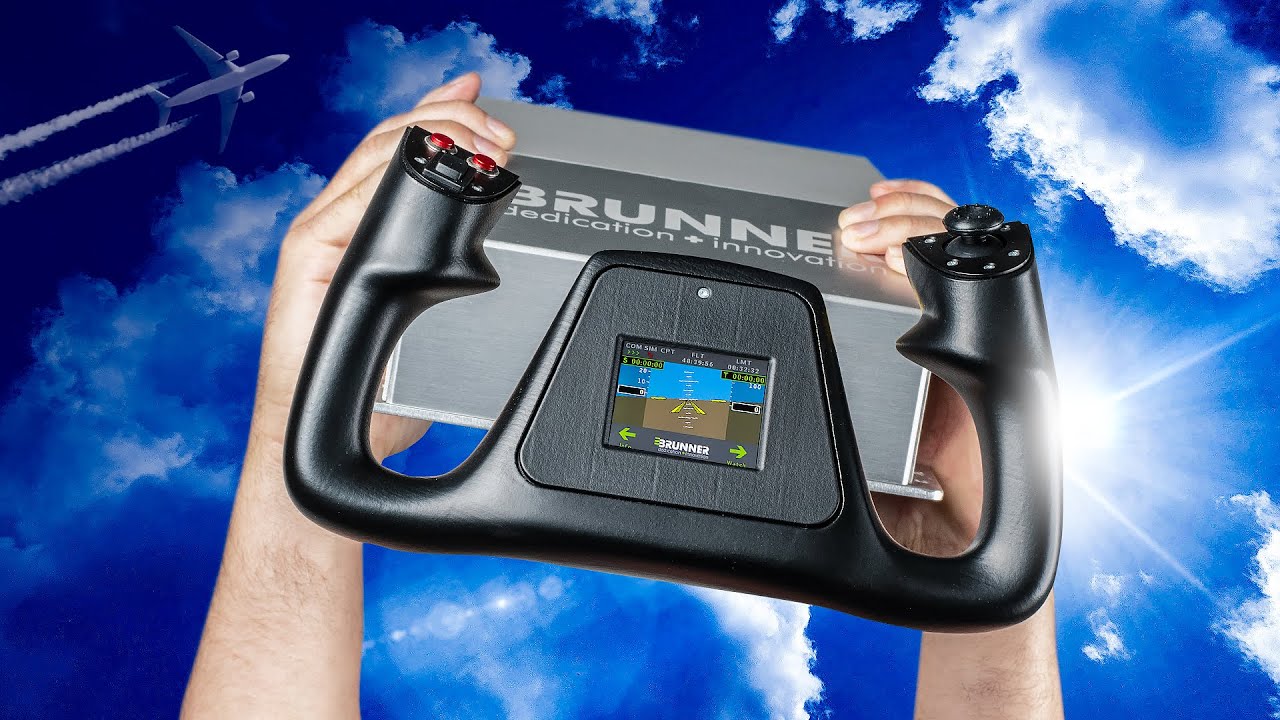
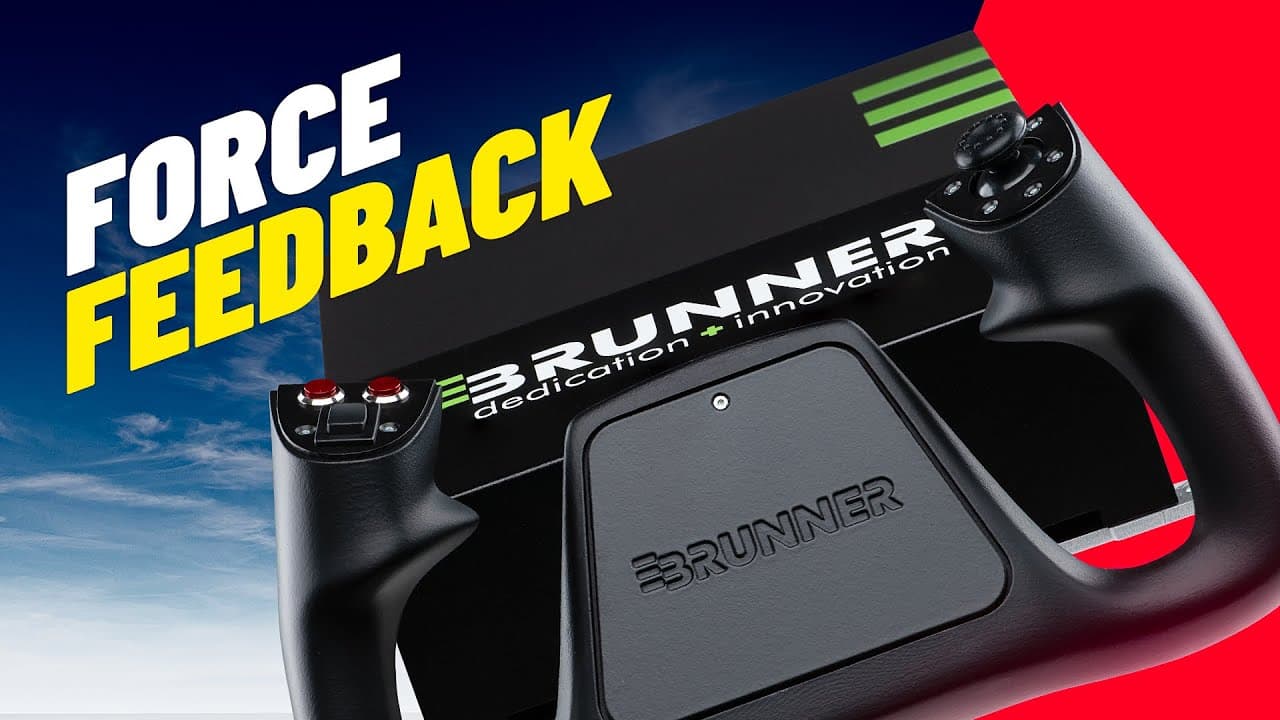
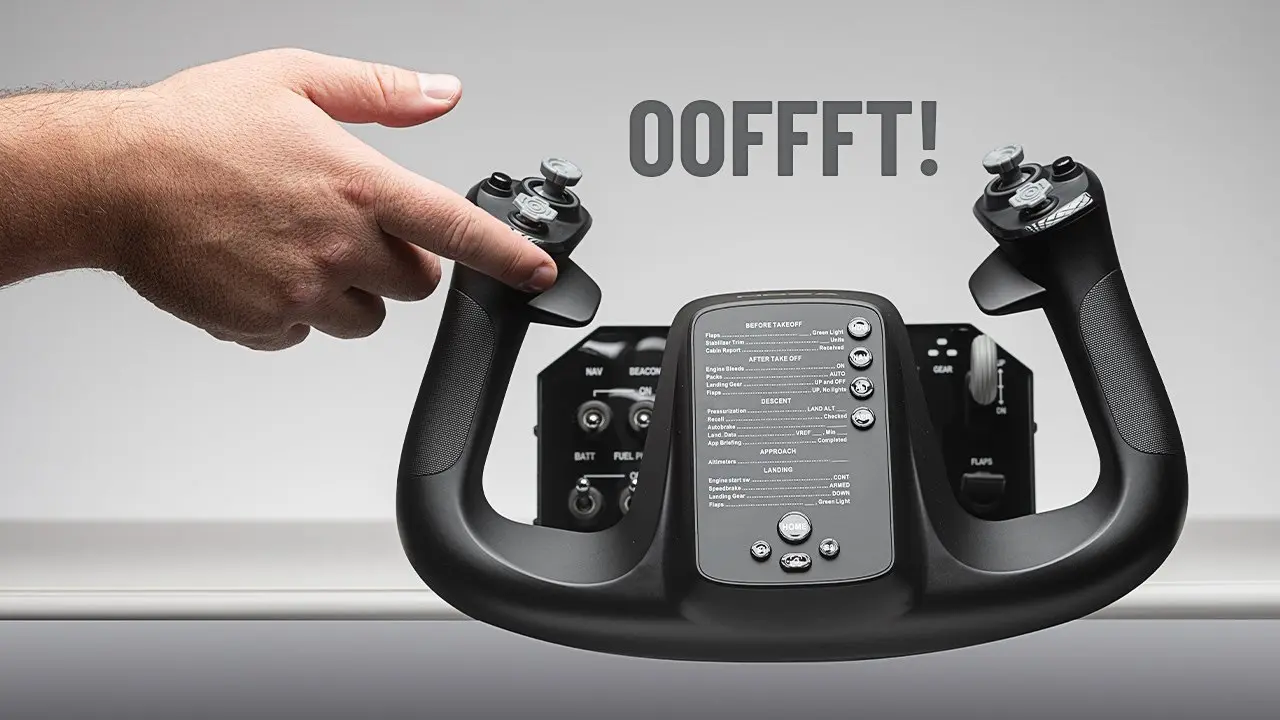
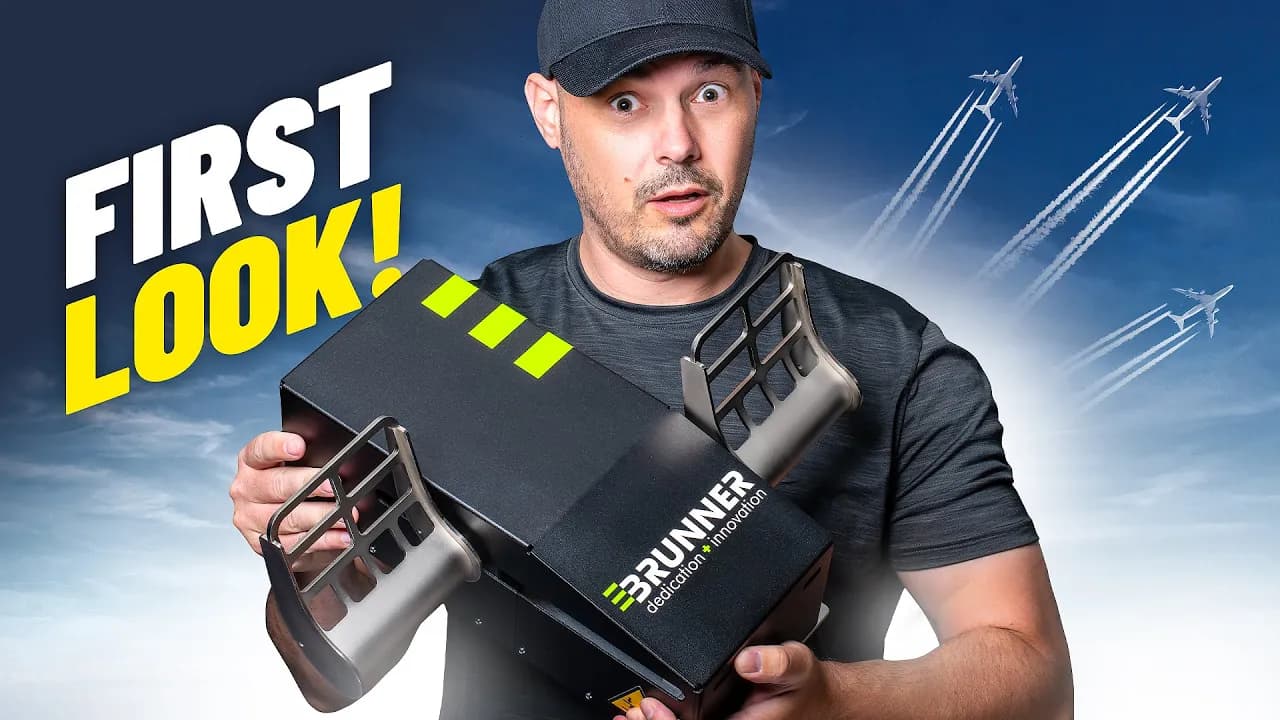
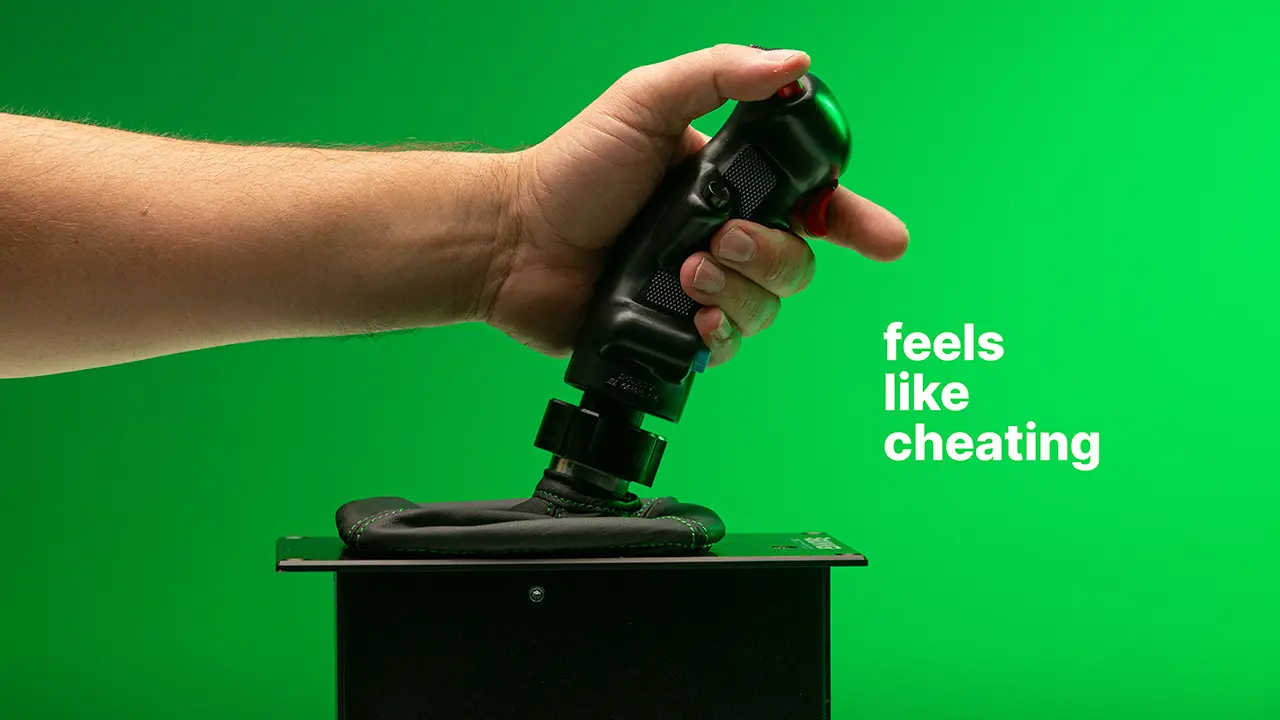
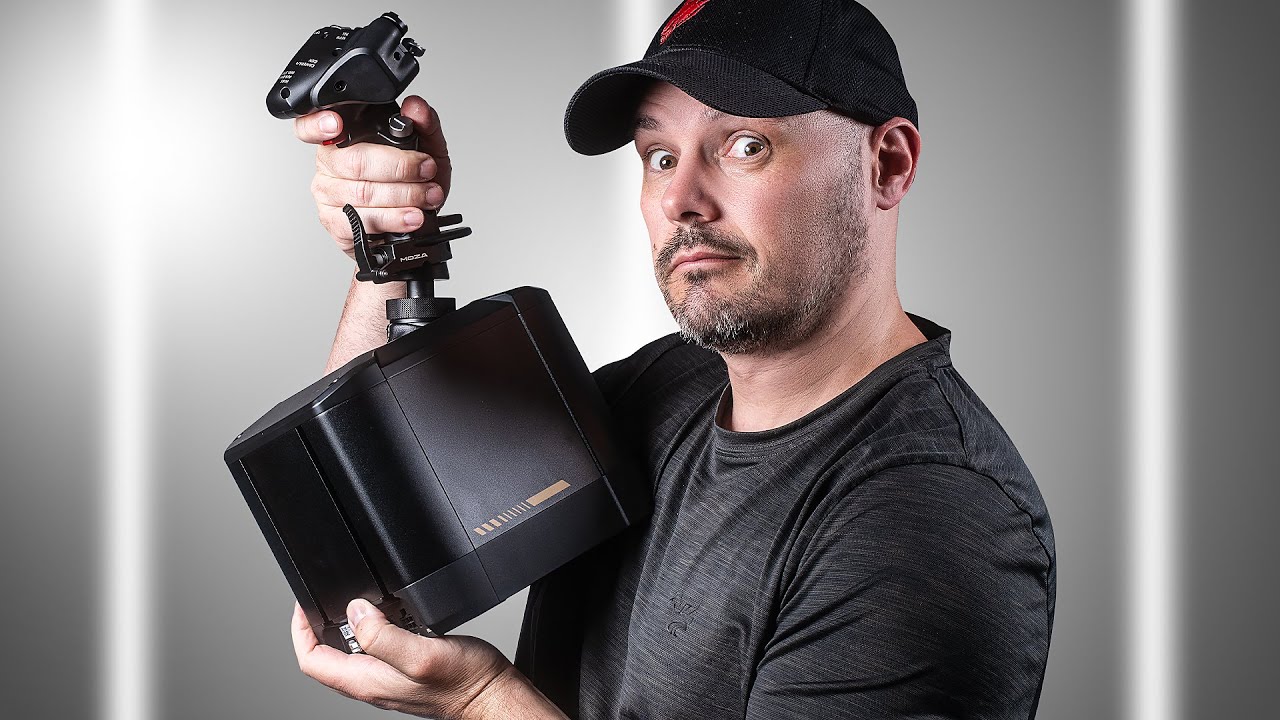
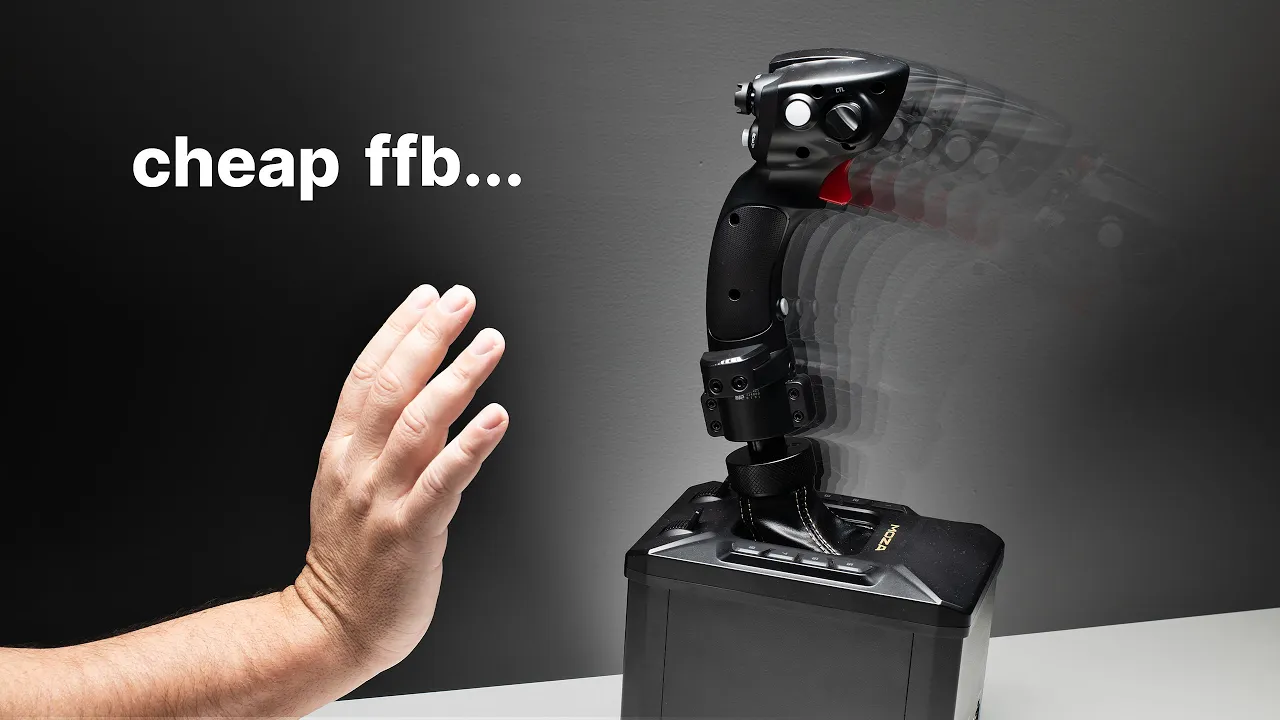
The force feedback yokes tested for this guide: Brunner, MOZA and Simionic.
Best Force Feedback Yokes for Flight Simulators (2026)
Category: General·Published: ·Last Updated:
Steve | G-LOC MEDIA
Flight simulation enthusiast and YouTuber
A force feedback yoke is the single biggest immersion upgrade you can make to a home flight simulator. Instead of a spring pulling the controls back to centre, a force feedback yoke uses motors to physically push, pull and resist against you, recreating the real aerodynamic load of an aircraft, trim changes, turbulence and stall buffet. This guide covers the force feedback yokes I have personally owned and tested, ranked honestly, plus the ones worth knowing about and what is coming next.
The short answer:
The best force feedback yoke in 2026 is the Brunner CLS-E MK II for outright quality, build and feel. The best value force feedback yoke is the MOZA AY210, which delivers build quality close to the high end Brunner with the longest pitch travel of the MOZA yokes. The cheapest way into force feedback is the MOZA AY90.
The lowest cost entry into force feedback flying that I know of. You give up pitch travel, power and the metal shell, but you keep MOZA's software, the backlighting and a genuinely good force feedback experience. Full Review.
The best force feedback yoke on the market right now if price is not a concern. Powerful, smooth, beautifully built and backed by Brunner's professional pedigree. Check it out
Build quality that genuinely rivals the high end Brunner, the longest pitch travel here, a full size yoke handle and the lowest price of the proper force feedback yokes. If you want the most yoke for your money, this is it. Check it out
A cheaper, more compact way to get genuine Brunner quality and software on your desk. You give up pitch travel and force strength, but you keep the build quality and the ecosystem. Check it out
Force Feedback Yoke Cost per Power
Please remember: These are standard manufacturers specs. Also, newtwons and newton meters are not a the main reason to make a purchase but it is a fun way to look at things.
Before you spend the money, these are the things that actually matter when choosing a force feedback yoke. Get these right and you will not be disappointed.
Force output
This is the headline number every manufacturer shouts about, usually quoted as Newtons for the pitch axis and Newton metres for the roll axis. More force means the yoke can push back against you harder, which matters most when you are flying heavier aircraft that need stronger control inputs. There is also the added benefit of more resolution and fidelity. Here is the honest reality though. The advertised numbers do not always translate to how a yoke actually feels in your hands. Two yokes with very different spec sheets can feel surprisingly close in real use. Treat the numbers as a rough guide, not gospel.
Pitch travel
Pitch travel is how far the yoke physically moves towards and away from you, measured in millimetres. Longer travel gives you finer, more realistic control and more room to make small precise inputs. This is one of the most overlooked specs and one of the most important. A yoke with short pitch travel can feel twitchy and cramped no matter how good the force feedback is. Comparing anything over 140mm becomes like splitting hairs, so try not to overthink it.
Build quality
A force feedback yoke is a long term purchase. The motors inside are working hard every time you fly, so the chassis needs to be solid and the materials need to last. Look at what the body is made of and pay attention to the yoke handle itself, because the handle is what you touch every single flight and it is often where corners get cut. There is nothing more annoying than a creaky, unstable yoke handle.
Yoke handle size
This one is easy to miss until you have a couple of yokes side by side. Some force feedback yokes ship with a full size handle that matches a real aircraft, while others use a slightly scaled down handle. It might sound minor, but you can genuinely see and feel the difference in the hand, and it changes how natural the yoke feels to fly.
Software
The software is just as important as the hardware, sometimes more. The software is what translates what is happening in your simulator into the forces you feel through the yoke. Good software lets you dial in the feel of a specific aircraft and get it sitting just right. Bad or overcomplicated software can leave a great piece of hardware feeling flat because you cannot get it tuned properly. Always factor the software into your decision.
Connection and ecosystem
Check how the yoke connects to your PC, whether that is USB or something else, and whether it plays nicely with the rest of your gear. Some manufacturers build a full ecosystem of rudders, throttles and panels designed to work together under one piece of software. If you are planning to build out a full setup over time, buying into an ecosystem can save you a lot of hassle later and have you running fewer plugins and pieces of software.
Mounting
Force feedback yokes are heavy and they generate real force, which means they will try to move around on you if they are not anchored down properly. Even the lighter, lower powered yokes need to be secured to a desk or a rig. Before you buy, work out exactly how and where you are going to mount it, and check whether a mounting solution is included or costs extra.
The Force Feedback Yokes I Have Tested
These are the four force feedback yokes I have personally owned and put real hours into. Full hands on verdicts, no guesswork.
Brunner CLS-E MK II
This yoke is the best on the market right now, and I do not say that lightly. I have put more than 200 hours into the Brunner CLS-E MK II on my main flight sim cockpit and it still feels exactly like it did the day I unboxed it. The only sign of wear at all is a slight bit of aberration on the left hand thumb rest. That is genuinely it.
It is powerful, it is smooth and it is extremely quiet. With a full 160mm of pitch travel and strong, responsive force feedback effects, it delivers the kind of realism that makes most others feel slightly toy afterwards.
Brunner has recently moved to new software, and at the time of writing SIMUX has had a few bugs. I want to be straight about that. But I am also seeing updates land every few days and those bugs are getting cleaned up fast, so the picture here is improving all the time.
The Brunner CLS-E MK II also connects into the rest of the Brunner ecosystem, including their high end force feedback rudders and the new entry level Brunner FFB-G rudders, so it is a natural anchor point if you want to build out a full Brunner setup.
This is a yoke for the serious flight simmer with deep pockets who simply wants the best. If price is not a concern, it is an absolute winner.
One thing to be aware of if you are buying from the US. Brunner ships from Switzerland, so factor in added shipping costs and possible import taxes on top of the headline price.
Pros
Best build quality and durability on the market
Over 200 hours of testing with virtually no wear
Powerful, smooth and very quiet force feedback
Full 160mm of pitch travel
Connects into the wider Brunner ecosystem including the new FFB-G rudders
Cons
Expensive, this is a premium purchase
SIMUX software still has bugs being worked through at time of writing
Added shipping costs and import taxes for US buyers
Yoke handle is 80 percent of real life size
Read my full hands on review of the Brunner CLS-E MK II yoke here.
The MOZA AY210 is MOZA's first attempt at a force feedback yoke, and it arrives at a mid range price that undercuts everything else here. It was a little shaky to start with because of software limitations, but the software has come good over time with plenty of updates.
The build quality of the yoke base is genuinely on par with the high end Brunner, which is exceptional at this price. The yoke handle, while great, is slightly more toyish than what either of the Brunners deliver. However it is a full size yoke handle compared to the Brunner's 80 percent size, and you can really see and feel the difference.
On paper the AY210 looks like a monster. It has 150mm of pitch travel, almost double the advertised pitch force of the high end Brunner and around 30 percent more roll force. Now, those are the advertised specs. I can tell you with certainty that this is not how it feels in practice. In real use these yokes feel close in terms of maximum power output. This is exactly why you should not buy on spec sheets alone.
MOZA has also made massive strides with its software and the feature set is huge. If anything they have almost gone too far, because all that depth can make the software tricky to navigate. At the time of writing this guide, it is noticeably easier to get a Brunner yoke dialled in and feeling good with the new SIMUX software than it is to get a MOZA dialled in with MOZA Cockpit.
Finally, the MOZA AY210 has a quick release detachable yoke handle, and it works very, very well. That can only mean one thing for the future. Yoke handle add ons. Watch this space, or this web page.
Pros
Build quality on the base rivals the high end Brunner
Lowest price of the proper force feedback yokes
Generous 150mm of pitch travel
Full size yoke handle, larger than the Brunner handles
Excellent quick release detachable yoke handle
Software has improved significantly with regular updates
Cons
Yoke handle feels slightly more toyish than the Brunner handles
MOZA Cockpit software is powerful but can be overcomplicated to navigate
Advertised force figures do not reflect the real world feel
Read my full hands on review of the MOZA AY210 force feedback yoke here.
Buy the MOZA AY210 Force Feedback Yoke Bundle here.
MOZA AY90 Force Feedback Yoke
The MOZA AY90 is the cheapest force feedback yoke I know of, and there is one thing you need to know before that number does any work in your head. The AY90 is a base only. It does not come with a yoke handle. You are buying either the standard MOZA handle or the Pro handle on top, which takes the real entry price from $399 USD to closer to $530 USD. Even at $530 it is still the cheapest way into force feedback by a long way, and it is not close.
MOZA have cut a few things to land on this price and most of them are what you would expect. The metal shell of the AY210 is gone, replaced by a full plastic housing. The mounting points on the ends are also plastic, and that is the one genuine warning I would give here. Do not over tighten them when screwing it down, because I do feel they could crack. The included mounting clamps work well and are the safer option. What has not been cut is the important stuff. The yoke rod is thick steel, you get the same acrylic front panel and MOZA's backlighting is still the best in the business, and it is just as quiet in operation as the AY210, which genuinely surprised me.
On power you get 4.2 Nm of peak roll torque and 90 N of push and pull. That is less than half the AY210 but more than double the Brunner CLS-E NG, and not once while flying it did I think it needed more.
The thing that actually decides whether the AY90 is right for you is pitch travel, which drops to 95mm against 160mm on the AY210. If you are coming from a Honeycomb it is more or less the same travel and you will not notice. If you are coming from nothing you will never know what you are missing. If you have flown something with 160mm you will notice it, though after a few hours and a few landings you do adapt. The upside of the shorter throw is size. At 315 x 210mm it is far smaller than the AY210, and on a desk that is a feature rather than a compromise.
Two smaller gripes. The magnetos do not have a spring return, and the flaps control is a linear slider with no detents where the AY210 has a far more functional toggle. Software is the same MOZA Cockpit as the rest of the range and it has matured well, though there is almost too much in there now and it is easy to overdo the effects and end up with a muddy feel.
If you are coming from a Honeycomb, you are new to force feedback, or your desk is small, take pitch travel out of the equation and the AY90 is a no brainer on value.
Pros
The cheapest way into force feedback that I know of
Enough power for a genuinely good experience
Same software and feature set as the high end MOZA yokes
Solid thick steel yoke rod
The best backlighting in the business
Small 315 x 210mm footprint, ideal for a desk setup
Just as quiet in operation as the AY210
Cons
Real price starts at around $530 USD, not $399, because no handle is included
Plastic housing and plastic mounting points, take care not to over tighten
95mm pitch travel is noticeable if you are coming from anything over 140mm
Magnetos do not have a spring return
Flaps control is a slider with no detents rather than a toggle
MOZA Cockpit software can feel overwhelming and it is easy to overdo effects
Read my full hands on review of the MOZA AY90 force feedback yoke here.
The Brunner CLS-E NG is the CLS-E MK II's little brother, and it loses a few important things compared to its bigger sibling. The most significant is pitch travel, which drops from 160mm down to 90mm. It also does not have the same strength or fidelity in the force feedback effects.
The build quality, though, is not far off its older sibling, and the yoke handles are almost identical, with the main difference being that the NG handle does not have a screen.
But not all is lost here, far from it. The CLS-E NG is significantly cheaper than the CLS-E MK II and much smaller, which makes it far better suited to a desk setup. Keep in mind that even with its reduced power you will still need to anchor it down properly.
If you want to get into the Brunner ecosystem, you want the reliability and quality of a Brunner product, and you want access to Brunner's experience on the software side, the CLS-E NG is a great choice. Just go in clear eyed about what you are giving up, with the reduced pitch travel being the main thing to consider.
As with the MK II, if you are buying from the US, be aware of added shipping costs and import taxes on top of the price.
Pros
Genuine Brunner build quality at a much lower price than the MK II
Compact size makes it well suited to a desk setup
Yoke handle almost identical to the more expensive MK II
Full access to the Brunner ecosystem and software
Cons
Pitch travel drops to 90mm, well short of the MK II and the MOZA
Less force strength and lower fidelity effects than the MK II
Still needs to be anchored down despite the lower power
Added shipping costs and import taxes for US buyers
Yoke handle is 80 percent of real life size
Read my full hands on review of the Brunner CLS-E NG yoke here.
The Simionic SHYK01 was my first ever force feedback yoke, and at the time it completely blew me away. It transformed the simulator for me. But as I have got my hands on more force feedback yokes over the years, I can now see clearly that the Simionic is lacking in a lot of areas.
The main one is the yoke handle. It is really not up to par for the price. On top of that, Simionic does not own their own software, and the software they do use is quite limiting compared to the others in this guide.
It does have decent pitch travel, but even so, the MOZA AY210 is a far better product all round and comes in around 20 percent cheaper.
I want to be straight with you here. In 2026, with the current landscape of force feedback yokes available, I cannot recommend the Simionic SHYK01. It served me well as a first force feedback yoke, but the rest of the market has simply moved past it.
Pros
Compact and easy to install or remove from a cockpit
Was a genuinely impressive first generation force feedback yoke
Cons
Yoke handle is not up to par for the price
Simionic does not own its own software and the available software is limiting
Outperformed by the MOZA AY210, which is also cheaper
Hard to recommend in 2026 given the current competition
A force feedback yoke uses motors to physically push and resist against your hands as you fly, instead of relying on a spring to centre the controls. This recreates the real aerodynamic load of an aircraft, including trim changes, turbulence and the buffet you feel as a wing approaches a stall. It is the closest thing home flight simulation has to the feel of a real aircraft.




.webp)
.webp)